Ship-in-Bottle Wall Art SVG Bundle Review
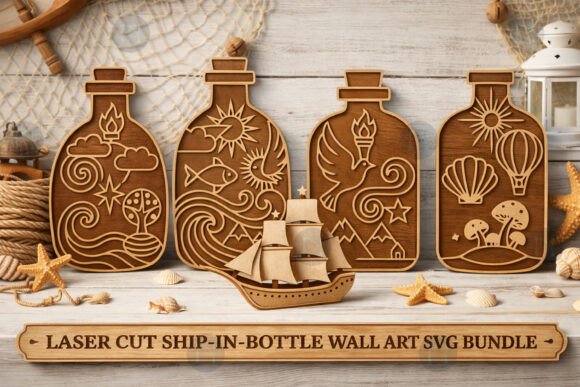
As a designer who spends half my life staring at stitch maps and the other half arguing with clients about thread counts, I approach every new digital asset with a healthy dose of skepticism. The market is flooded with vector files that look beautiful on a screen but fall apart under the needle. That is why when I pulled up the Ship-in-Bottle Wall Art SVG Bundle, I didn’t just look at the preview image; I looked for structural integrity, thematic resonance, and commercial viability.
This bundle is marketed primarily as a laser cutting and digital crafting file, intended for use with machines like Glowforge or Cricut. However, many of us in the craft business are hybrid creators. We want to know if these intricate shapes can translate effectively into textile arts. Can this design survive the transition from a flat vector to a three-dimensional handmade product? After running through several mental mockups and reviewing the geometric complexity of the bundle, here is my practical assessment for designers, Etsy sellers, and creative entrepreneurs.
First Impressions: Mood and Visual Personality
The immediate appeal of the Ship-in-Bottle Wall Art SVG Bundle lies in its whimsical yet structured aesthetic. It taps into a classic nautical fantasy, which naturally evokes feelings of adventure, curiosity, and calm. For a home decor item, this mood is highly desirable. It isn’t aggressive or overly busy; it has a balanced visual weight that suggests quality rather than clutter.
From a design perspective, the layout feels clean. The lines are distinct, which is crucial for any machine embroidery design that aims to replicate the sharp edges of laser-cut wood or acrylic. If you were to digitize this for embroidery, the primary challenge—and opportunity—lies in translating those crisp vector boundaries into soft thread textures. The design personality is sophisticated enough for a boutique home goods store but playful enough for a nursery or a child’s bedroom. It bridges the gap between modern minimalism and traditional storytelling, making it a versatile choice for various interior styles.
Real-World Application: From Vector to Stitch
Let’s talk about how this would actually perform in a real project. Imagine you are preparing a custom order for a client who wants a unique personalized gift. You decide to use the ship motif as an appliqué on a heavy-duty canvas tote bag. Because the original file is designed for precision cutting, the resulting embroidered shape would likely have very clean edges, especially if you use a tight satin stitch border to secure the fabric piece.
This approach works exceptionally well for custom apparel such as sweatshirts or denim jackets. The contrast between a dark navy fabric and a white or cream-colored ship appliqué creates a striking visual pop. It transforms a basic garment into a statement piece. Similarly, for baby embroidery, placing a smaller version of the ship on a muslin blanket or a burp cloth adds a touch of elegance that parents appreciate. It elevates the perceived value of the item, allowing you to charge a premium price point because it looks professionally finished rather than hastily stitched.
I also see strong potential in embroidered patches. By adding a sturdy backing and stitching a dense border, this design could become a collectible accessory for hats, backpacks, or aprons. The nautical theme resonates strongly with maritime enthusiasts, making it a smart inventory choice for niche markets. Whether you are selling at craft fairs or listing on Etsy, having a design that tells a story helps drive buyer engagement. Customers don’t just buy a ship; they buy the idea of exploration.
Where Caution Is Required
However, no design is without its pitfalls. The Ship-in-Bottle Wall Art SVG Bundle contains intricate details that require careful handling during digitization and execution. If you attempt to stitch this directly onto a textured fabric, such as a chunky knit sweater or a rough burlap, the fine lines may get lost. The thread might not lay flat, resulting in a muddy appearance that lacks the crispness of the original vector.
Furthermore, be wary of using this design on stretchy fabrics without proper stabilization. Ship bottles imply containment and structure; if the fabric distorts under tension, the illusion breaks. Always test your stitch density on scrap pieces first. Small details, such as the rigging of the ship or the neck of the bottle, can easily merge together if the hoop size is too small or the zoom level is insufficient during editing. On curved surfaces like caps, the distortion will warp the bottle shape, so this design is better suited for flat applications like pillow covers, tea towels, or wall hangings where the fabric remains taut.
Technical Considerations for Designers
When integrating this bundle into your workflow, keep the following practical notes in mind. First, always inspect the small details before committing to a full production run. Use black and white mockups to check the balance of negative space. A design that looks balanced in color might feel unbalanced in monochrome, which is often how customers perceive texture and depth in embroidery.
Thread color selection is critical. To maintain the clarity of the ship-in-bottle silhouette, high contrast is usually best. A light thread on a dark background or vice versa ensures that the eye can follow the curves of the glass and the hull of the ship. Avoid using threads that are too similar in tone to the base fabric unless you are aiming for a subtle, tonal effect, which requires advanced technique.
You must also consider the stabilizer. For a design that mimics a rigid object like a bottle, you need a firm foundation. Cut-away stabilizers are generally recommended for woven fabrics to prevent puckering, while tear-away might suffice for temporary projects on stable knits. Confirm whether the design includes separate layers for different stitch types, such as satin stitch for borders and fill stitch for shading. If the file is purely a cut line, you will need to add the embroidery elements yourself, which adds time to your production process.
Commercial Viability and Brand Consistency
For small shop owners and digital product sellers, the versatility of this bundle is its greatest asset. It fits seamlessly into a broader brand narrative focused on nautical themes, coastal living, or maritime history. You can create a cohesive collection by pairing this design with matching anchor motifs or wave patterns. This consistency builds brand recognition and trust with your audience.
The design is also highly giftable. Holiday seasons, birthdays, and weddings are prime opportunities to market this item. A framed embroidered ship-in-bottle makes for a memorable housewarming gift. By positioning it as a commercial embroidery ready-to-use asset, you save hours of design time and can focus on marketing and customer service. Just remember to check the licensing terms carefully. Ensure you have the right to sell finished items made from this design, and clarify if there are restrictions on reselling the digital file itself.
Final Verdict
The Ship-in-Bottle Wall Art SVG Bundle is more than just a pretty picture; it is a structurally sound design with significant commercial potential. It offers a perfect blend of whimsy and precision, making it suitable for a wide range of embroidery projects from tote bag designs to delicate nursery decor. While it requires attention to detail regarding fabric choice and stabilization, the payoff in terms of professional finish and customer satisfaction is high. For designers looking to expand their design assets with a timeless, elegant motif, this bundle is a worthy addition to your library. Test it thoroughly, respect the limits of the medium, and let the craftsmanship speak for itself.